Overview
On the morning of Monday 22 October 1877, an explosion tore through Pits No. 2 and No. 3 of William Dixon’s Blantyre Colliery in Lanarkshire. The official death toll was 207, although local research has since identified at least 215 victims. Among the dead were boys of just eleven and twelve.
It remains Scotland’s worst mining disaster. Almost every household in the surrounding mining rows was affected, and the loss shaped the community for generations.
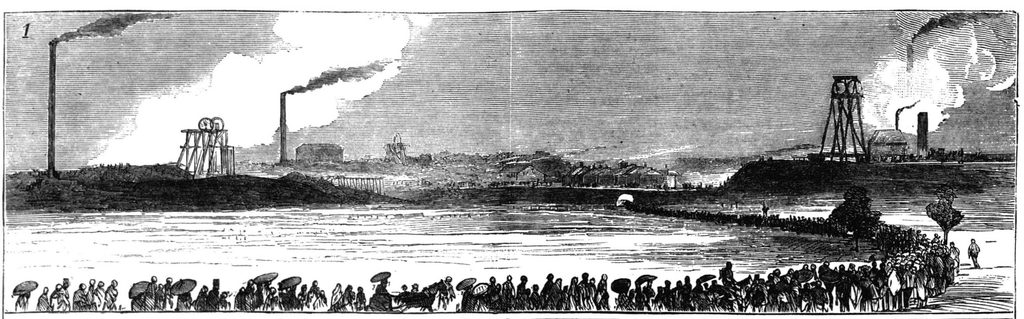
Scottish Mining Website (n.d.) Blantyre Colliery explosion, 1877 [image]. Available at: http://www.scottishmining.co.uk/Indexes/blantyre1877-1.jpg (Accessed: 16 October 2026).
Genealogy Focus
Behind those numbers were families. Fathers and sons, brothers and cousins went down the pit together that morning. Twelve-year-old James Clyde died alongside his father and his brother William.
If your ancestors came from the Lanarkshire coalfield, a disaster like this can explain a lot: a man who vanishes from the records, a young widow who remarries, a family that suddenly moves away or turns up in the Poor Law registers.

Benjamin Gold, coal miner, aged 24, married to Isabella Crawford, of Auchinraith. He died at 8.45am on 22 October 1877 in No. 3 Pit, Dixon’s Colliery. His sister-in-law Mary Gold was the informant and signed with her mark. His brother John died in the same explosion.
Statutory Registers of Deaths, 1877, Blantyre (624/239), p. 80. © Crown copyright, National Records of Scotland.
- Statutory death records: Most victims were registered in Blantyre. Bodies were recovered over several weeks, so registration dates run from late October into November 1877. Check the margin for a link to the Register of Corrected Entries, which may record the Procurator Fiscal’s findings.
- The official inquiry report: The government report on the explosion was presented to Parliament in December 1877. It names the colliery staff and witnesses, and explains how the pits were worked.
- Poor Law records: Registers of applications for Blantyre parish are held at Glasgow City Archives. Many widows were supported by the relief fund instead, so a gap in the Poor Law records may mean a family was on the fund rather than coping alone.
- Relief fund records: A national relief fund raised over £48,000 and paid weekly allowances to widows and children until 1930. Surviving records are scattered, but newspaper reports of its annual meetings can help.
- Newspaper reports: The Hamilton Advertiser, Glasgow Herald and Scotsman printed lists of the dead, the injured and survivors, along with funeral reports and later court cases.
- Burial grounds: Many victims lie in High Blantyre (Kirkton) Cemetery. Catholic victims, many of them of Irish descent, were often buried at Dalbeth Cemetery in Glasgow.
Research Tips
- Start with the death record. It gives age, address, parents and the informant. The informant is often a widow or mother who can then be traced forward.
- Use the 1871 and 1881 censuses to place the family in the mining rows before the disaster and to see where survivors went afterwards.
- Look for family clusters. Fathers and sons, brothers and in-laws often worked side by side, and one household could lose several members.
- Follow widows and children forward. Look for remarriages, moves away from Blantyre and Poor Law claims in later years. Some widows were evicted from company houses within months of the disaster.
Do you have mining ancestors from Blantyre or elsewhere in the Central Belt? Tell me in the comments.
And if you’d like help tracing them,please get in touch.
References
- MacLean, R. and Dickinson, J. (1877) Report on the Blantyre Colliery Explosion, 21 December 1877. Presented to both Houses of Parliament by Command of Her Majesty. London: HMSO.
- Wright, S. (1885) The Annals of Blantyre. Glasgow.
- Veverka, P. (n.d.) Blantyre Pit Disaster [list of the dead, survivors, relief fund and inquiry transcriptions]. Blantyre Project.
- Blantyre Project (2015) 1877 Ejection of Blantyre Widows.
- Blantyre Project (2023) Blantyre Accident Fund 1877–1930.
- Gazetteer for Scotland (n.d.) Blantyre Mining Disaster.
- Glasgow Family History (n.d.) What records can I find in the Mitchell: Glasgow City Archives? – Poor Law.
- ScotlandsPeople: statutory registers of deaths, Blantyre registration district, 1877; Register of Corrected Entries. scotlandspeople.gov.uk